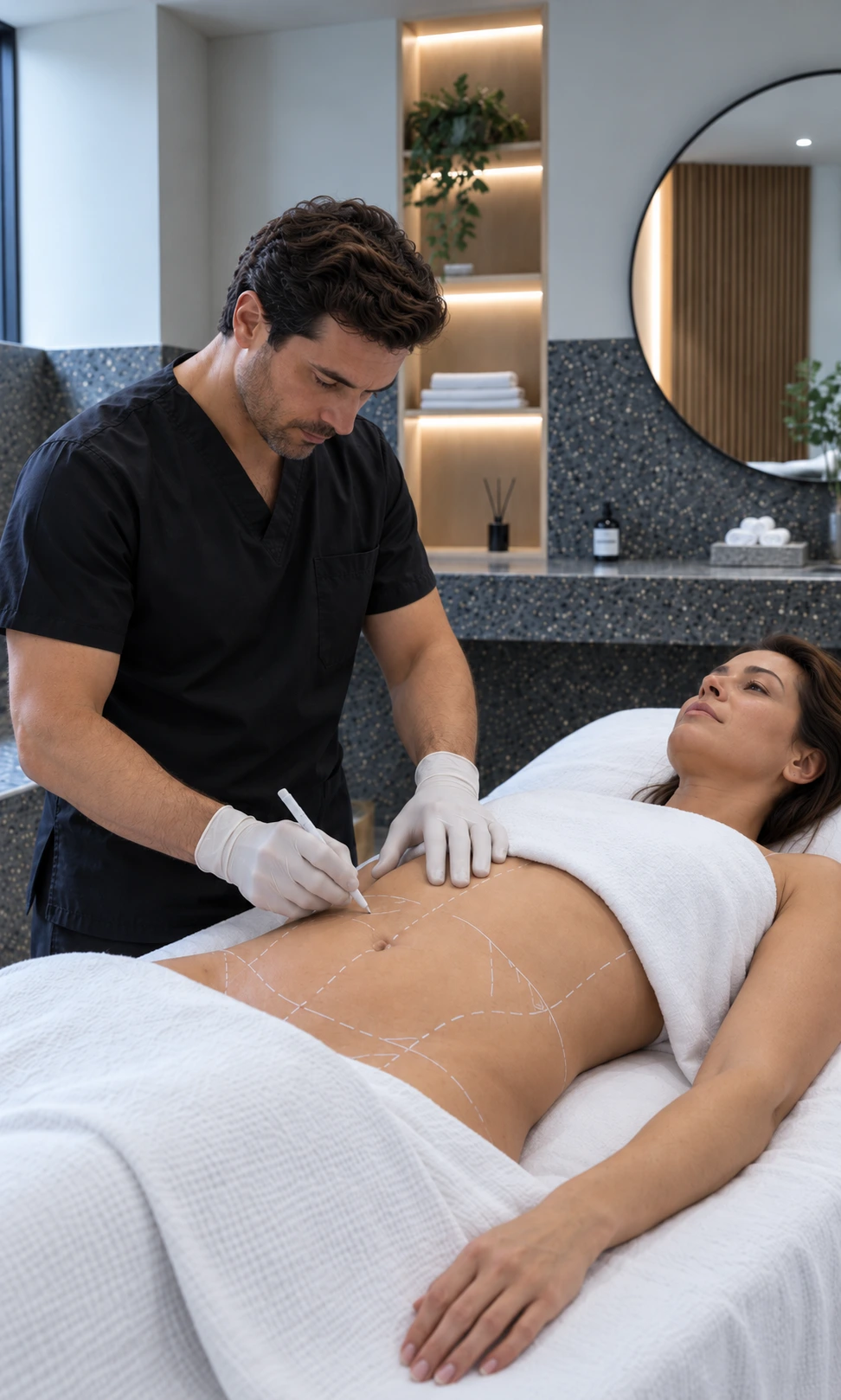
Redefine your abdomen, eliminate excess skin and restore a firmer, more harmonious silhouette.
Your best version, always.
Natural results
Safe procedure
Personalised approach
Confidentiality
The treatmentWHAT IS IT
What is a tummy tuck?
A tummy tuck (abdominoplasty) is a plastic surgery procedure that removes excess skin and fat from the abdominal area and can, when indicated, correct the separation of abdominal muscles, contributing to a firmer, more defined abdomen.
A tummy tuck involves removing excess skin and tissue from the lower abdomen, repositioning the skin and, when necessary, correcting the abdominal muscles. The technique is tailored to each patient's anatomy and needs.
Key information about the procedure, recovery and results, so you can make an informed decision with peace of mind.
No sun exposure
30 to 40 days
No physical exercise
30 to 45 days
Possible bruising
Yes
Results appear
From 30 days
WHO IS IT FOR
Is it for you?
A tummy tuck may be suitable for people with:
Excess abdominal skin
Significant laxity after weight loss
Abdominal wall changes after pregnancy
Separation of the abdominal muscles, when clinically indicated
Excess tissue in the lower abdomen
A desire to restore a firmer, more defined abdomen
The procedure
How is a tummy tuck done?
A personalized approach for your abdomen.
1
Personalised assessment
A personalised analysis that takes the patient's main concerns into account.
2
Personalised planning
Pre-operative care and tests.
3
The surgery
An invasive procedure performed in hospital.
4
After surgery
A visit from the doctor before hospital discharge and the start of post-operative care.
5
Follow-up
Follow-up medical visits to monitor your progress and give guidance, as advised by the doctor.
BENEFITS
Benefits of a tummy tuck
Regain confidence in your contour.
Reduced excess skin
Firmer abdomen
Improved abdominal contour
Laxity correction
Possible diastasis correction
More harmonious silhouette
PRICE
How much does a tummy tuck cost in Lisbon?
A surgical plan designed for you.
The investment in a tummy tuck depends on the technique used, the amount of tissue to be treated, the complexity of the case and any associated procedures. The final cost is defined after assessment and surgical planning.
Tummy tuck: technical information
Types of surgery, who it is for, risk factors, possible complications and the scar. The essentials for an informed decision.
What is a tummy tuck and how does it work?
An abdominoplasty, or tummy tuck, is surgery that removes excess skin and fat from the abdomen, mainly below the navel. When there is diastasis (separation of the rectus abdominis muscles, common after pregnancy), the muscles can be brought together and stitched, which is called plication. The navel is repositioned and the remaining skin is redraped, for a flatter, firmer abdomen.
Types of tummy tuck
The surgeon chooses the technique according to the amount of excess skin, where the laxity is and the condition of the muscles:
Full tummy tuck: treats the whole abdomen, with muscle plication and repositioning of the navel
Mini tummy tuck: for excess skin limited to below the navel, with a shorter scar
Lipoabdominoplasty: combined with liposuction to also treat localized fat and define the contour
Fleur-de-lis tummy tuck: with an additional vertical incision, mainly after major weight loss
Who is it for?
Loose, excess abdominal skin after pregnancy or weight loss
Abdominal diastasis that does not improve with exercise
People with a stable weight close to their goal
Women who no longer plan to become pregnant, as a later pregnancy can change the result
It is not a weight-loss method
A tummy tuck improves the shape of the abdomen, but it does not replace weight loss. The best results come with a stable weight, maintained after surgery with a balanced diet and exercise.
Factors that increase the risk of complications
Smoking: it should be stopped for weeks before and after surgery
Significant excess weight
Uncontrolled diabetes or high blood pressure
Previous abdominal surgery
History of thrombosis or use of anticoagulants
Possible complications
Like any surgery, a tummy tuck carries risks, which are explained in detail at the consultation: fluid build-up (seroma), haematoma, infection, delayed healing, temporary changes in skin sensation and, more rarely, thrombosis. A pre-operative assessment, the compression garment, getting moving early and following instructions help reduce these risks.
The tummy tuck scar
The incision is made low on the abdomen so that it is covered by underwear or a bikini. There is also a small scar around the navel. In the first months the scar may look redder; it usually becomes thinner and lighter over 12 to 18 months, especially if protected from the sun.
Tummy tuck or liposuction?
Liposuction: removes localized fat, but does not remove excess skin or treat diastasis
Tummy tuck: removes skin and fat and can correct diastasis
When there is both localized fat and laxity, the two techniques can be combined
How to prepare and recover
Preparation
Complete the pre-operative tests requested by the team before your surgery date.
Stop smoking in the weeks before surgery, as advised by the surgeon.
Tell the team about all the medicines and supplements you take, especially blood thinners.
Keep a stable weight before surgery and tell the team about any change in your health.
Recovery
Wear the compression garment for the period advised by the surgeon, day and night if recommended.
Take short walks at home from the first few days, avoiding strain and heavy lifting.
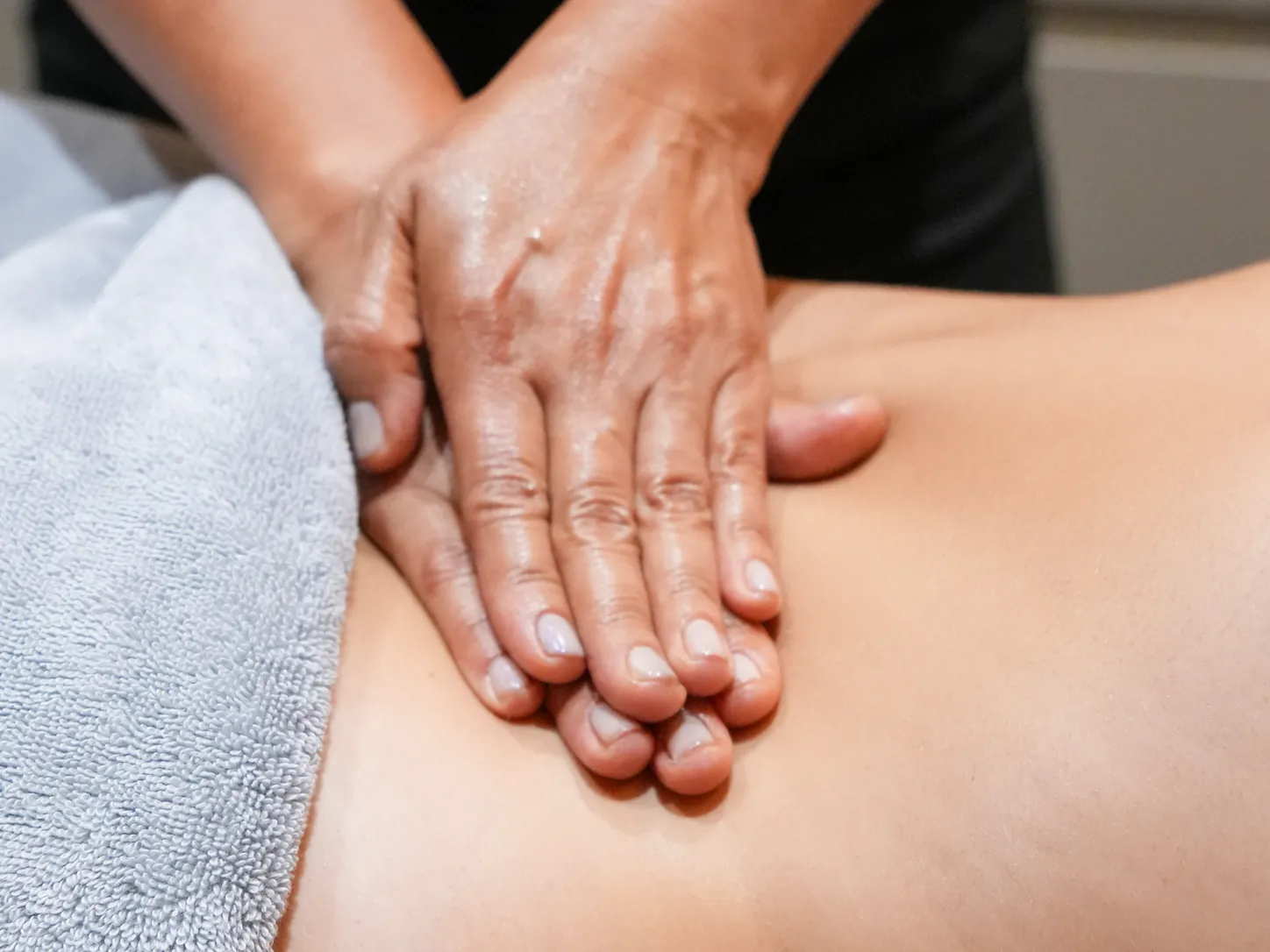
Lymphatic drainage may help reduce swelling; the clinic offers post-operative care after surgery.
Return to your activities gradually and avoid exercise for 30 to 45 days.
Contact the clinic if you have severe pain, fever, uneven swelling or bleeding.
FAQ
Get your questions answered.
A tummy tuck mainly treats excess skin and abdominal laxity, and can also correct the muscle wall. Liposuction mainly acts on removing localized fat.
It can remove some excess fat along with the skin, but the surgery's main goal is to treat excess skin and laxity. In certain cases, liposuction can be combined.
Yes. When there's diastasis and a surgical indication, the abdominal wall can be repaired during the procedure.
It can be an option for women with excess skin, laxity or abdominal wall changes after pregnancy, provided the gestation period has ended and they are properly assessed.
Recovery varies from person to person. The first weeks require specific care and the return to exercise is usually gradual.
The surgery leaves a permanent scar. The incision is usually planned in a low, discreet position, but the scar's final appearance varies from person to person and depends on the healing process.
Improvement in contour can be seen after the first weeks, but the result continues to evolve over the following months.
The length depends on the technique, the amount of tissue to treat and on any associated procedures. The surgery takes place in a hospital setting; the type of anaesthesia and the need for an overnight stay are usually decided by the surgeon at the consultation, case by case.
The surgery is performed under anaesthesia, so you should not feel pain during the procedure. Afterwards there may be discomfort, tightness or tenderness, generally managed with the medication prescribed by the team.
In general, it is not possible to return the next day. Time off varies from person to person, with the extent of the surgery and with the type of work, and will be advised by the surgeon during follow-up.
Stretch marks on the skin that is removed, usually below the navel, go with it. The others may look less visible once the skin is firmer, but they are not removed.
The abdomen is swollen and firmer in the first weeks and gradually takes its final shape over a few months. The compression garment, lymphatic drainage and a stable weight help you reach and keep the result.
Yes, in the first weeks the abdomen often feels hard, with areas of altered sensation, because of swelling and healing. It usually softens gradually. If the hardness increases, or you have severe pain, redness or fever, contact the team.
When there is no significant excess skin, a balanced diet, exercise and non-surgical body contouring treatments can improve localized fat and firmness. When there is excess skin or diastasis, surgery tends to be the most effective option.
The price depends on the technique, the extent of the surgery and each person's characteristics, and includes factors such as anaesthesia and the operating theatre. After the consultation with the surgeon, you receive a personalized quote.
Redefine your abdomen.
Book your consultation and discover how a tummy tuck can help restore firmness and harmony to your body contour.